

Does the SAVE Act Save Democracy… or Quietly Shut Women Out?
Gen X Women Want to Know.

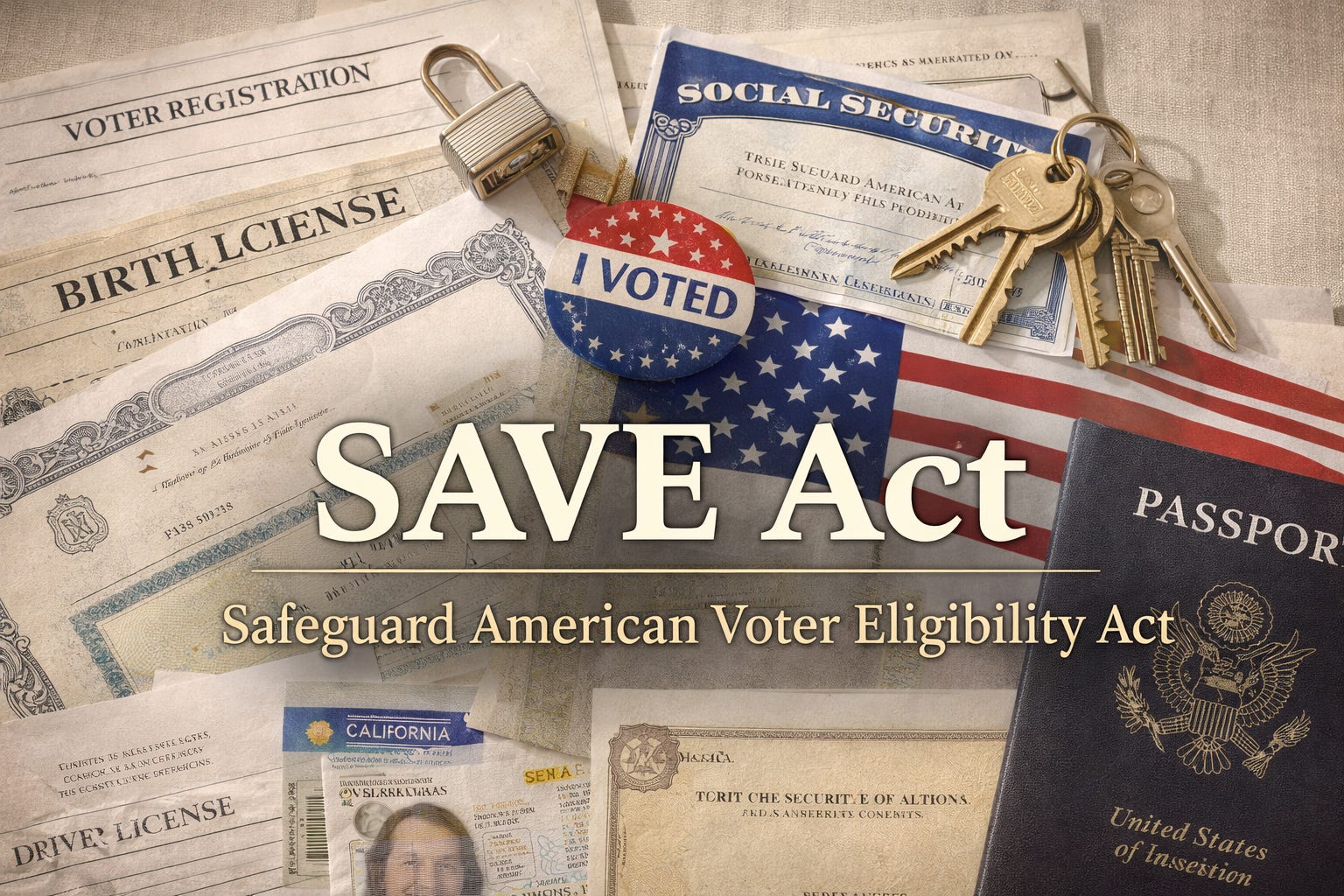
There’s a reason many women are starting to ask uncomfortable questions about the SAVE Act (Safeguard American Voter Eligibility Act).
At first glance, the bill sounds simple.
Require proof of citizenship when registering to vote in federal elections.
Supporters say it protects election integrity.
Critics say it creates a bureaucratic wall between millions of Americans and the ballot box.
And when you start tracing how identification documents actually work in real life, especially for married women, divorced women, caregivers, and women who changed their names decades ago, the conversation gets a lot more complicated.
For Gen X women, the implications hit a particularly sensitive nerve.
This is the generation that:
• changed names after marriage in the 1990s
• moved frequently for careers and caregiving
• often holds property and finances jointly with spouses
• is increasingly responsible for aging parents and adult children
In other words, Gen X women sit right at the intersection of documentation gaps and civic participation.
So let’s walk through what the SAVE Act actually does and why it could affect millions of women.
What the SAVE Act Actually Requires
The SAVE Act would amend federal election law to require documentary proof of U.S. citizenship when registering to vote in federal elections.
That means showing one of the following:
• A U.S. passport
• A birth certificate
• Naturalization papers
• Other approved citizenship documentation
States would be required to verify citizenship documentation before allowing registration.
This changes the current system where people generally attest under penalty of perjury that they are citizens.
More information:
National Conference of State Legislatures
https://www.ncsl.org/elections-and-campaigns
Congress.gov legislative text
https://www.congress.gov

Click the image above to grab your Gen-X Women’s Documentation Checklist
Where Women Get Caught in the Documentation Gap
Here’s where things start to unravel.
Many women’s legal identity documents do not match each other.
A typical Gen X paper trail might look like this:
Birth certificate: Jane Williams
Marriage certificate: Jane Williams marries Mark Carter
Driver’s license: Jane Carter
Passport: Jane Carter-Smith (after remarriage)
If voter registration requires matching proof of citizenship, the name mismatch becomes the barrier.
The SAVE Act does not automatically account for the complex documentation trail created by:
• marriage
• divorce
• remarriage
• hyphenated names
• legal name changes
This disproportionately affects women because 80–90% of married women historically changed their last name.
Research reference
Pew Research Center
https://www.pewresearch.org
The Married Woman Documentation Problem
Millions of women do not have immediate access to their original birth certificate.
Why?
Because it’s often:
• in a parent’s possession
• stored in another state
• lost decades ago
• issued under a maiden name that no longer appears on current ID
If the SAVE Act requires birth certificate proof tied to voter registration, women may need to reconstruct their identity chain.
That means:
Birth certificate → marriage certificate → divorce decree → remarriage certificate
Each document may require fees, time, and bureaucracy.
For women managing caregiving, work, and households, this becomes a real barrier.
Passport Ownership Is Not Equal
One argument supporting the SAVE Act is that Americans can simply use passports.
The problem?
Only about 48% of Americans hold a passport.
And passport ownership drops significantly among:
• lower-income Americans
• rural residents
• older women
• caregivers
Gen X women who stayed close to home raising families often never needed one.
State Department statistics
https://travel.state.gov
The Caregiver Reality
Gen X women are now the largest caregiving demographic in the United States.
Many are caring for:
• aging parents
• spouses with health issues
• grandchildren
Caregiving often reduces time, income, and mobility.
Adding additional documentation requirements for voting can unintentionally squeeze out the very people carrying the social safety net.
AARP research shows that family caregivers already lose an average of $300,000 in lifetime wages and benefits.
Add documentation hurdles, and participation in civic life becomes harder.
Why Critics Say the SAVE Act Could Reduce Women’s Voting Access
Critics argue the bill creates a documentation barrier, not a citizenship safeguard.
The concern is not about eligibility.
The concern is administrative friction.
If even a small percentage of voters cannot produce required documentation quickly, participation drops.
Research from voting access studies consistently shows that administrative barriers reduce turnout, especially among:
• women
• seniors
• rural communities
• lower-income households
Brennan Center voting research
https://www.brennancenter.org
Why Supporters Say the Act Is Necessary
Supporters of the SAVE Act argue that:
• citizenship verification strengthens election integrity
• documentation requirements increase public trust in elections
• the law aligns federal registration with proof of citizenship
They point to cases of non-citizen registration errors, though documented cases remain rare relative to the total voting population.
This is where the policy debate lives.
Between security and accessibility.
Five Things Gen X Women Can Do Now
Regardless of where someone stands politically, preparation matters.
Here are five practical steps women can take now.
1. Locate Your Original Birth Certificate
Make sure you know:
• where it is stored
• whether the name matches your current legal identity
• whether you need a certified copy
Request replacements through your state vital records office.
CDC Vital Records Directory
https://www.cdc.gov/nchs/w2w/index.htm
2. Keep a Name-Change Document Chain
If your name changed through marriage or divorce, keep copies of:
• marriage certificates
• divorce decrees
• legal name-change documents
Think of it as a paper trail of identity continuity.
3. Consider Applying for a Passport
Even if you never plan to travel internationally, a passport is the simplest universal proof of citizenship.
U.S. Passport Information
https://travel.state.gov
4. Check Your Voter Registration Status
Many states allow you to verify registration online.
Vote.gov
https://www.vote.gov
5. Stay Informed About State Implementation
Even if the SAVE Act passes federally, states will determine how documentation requirements are applied.
Follow updates from:
• National Conference of State Legislatures
• your state election office
• reputable civic organizations
The Real Question
The debate around the SAVE Act ultimately raises a bigger question.
Not whether citizenship should matter in elections.
But how documentation systems interact with real human lives.
Especially the lives of women whose identities, names, and responsibilities often evolve across decades.
Gen X women have spent years holding families, careers, and communities together.
The last thing any democracy should do is quietly make it harder for them to participate in shaping its future.